Starting personal training can feel like a big step, especially if you haven’t exercised for a while.
You might be wondering:
Am I fit enough to start?
Will the sessions be too hard?
What if I don’t know how to use gym equipment?
How many times a week should I train?
And perhaps the biggest question — where do I actually start?
At Movement District in Edgecliff, we work with people at all different fitness levels, including plenty of people who are completely new to structured training or returning after years away from the gym.
The good news is simple: you don’t need to get fit before you start personal training. Getting fit is the reason you start.
Do I Need to Be Fit Before Starting Personal Training?
No.
This is probably one of the biggest misconceptions we hear from people considering joining a gym or working with a personal trainer.
People often tell themselves:
“I’ll get a little fitter first, then I’ll join.”
But that’s a bit like saying you’ll learn to swim before taking swimming lessons.
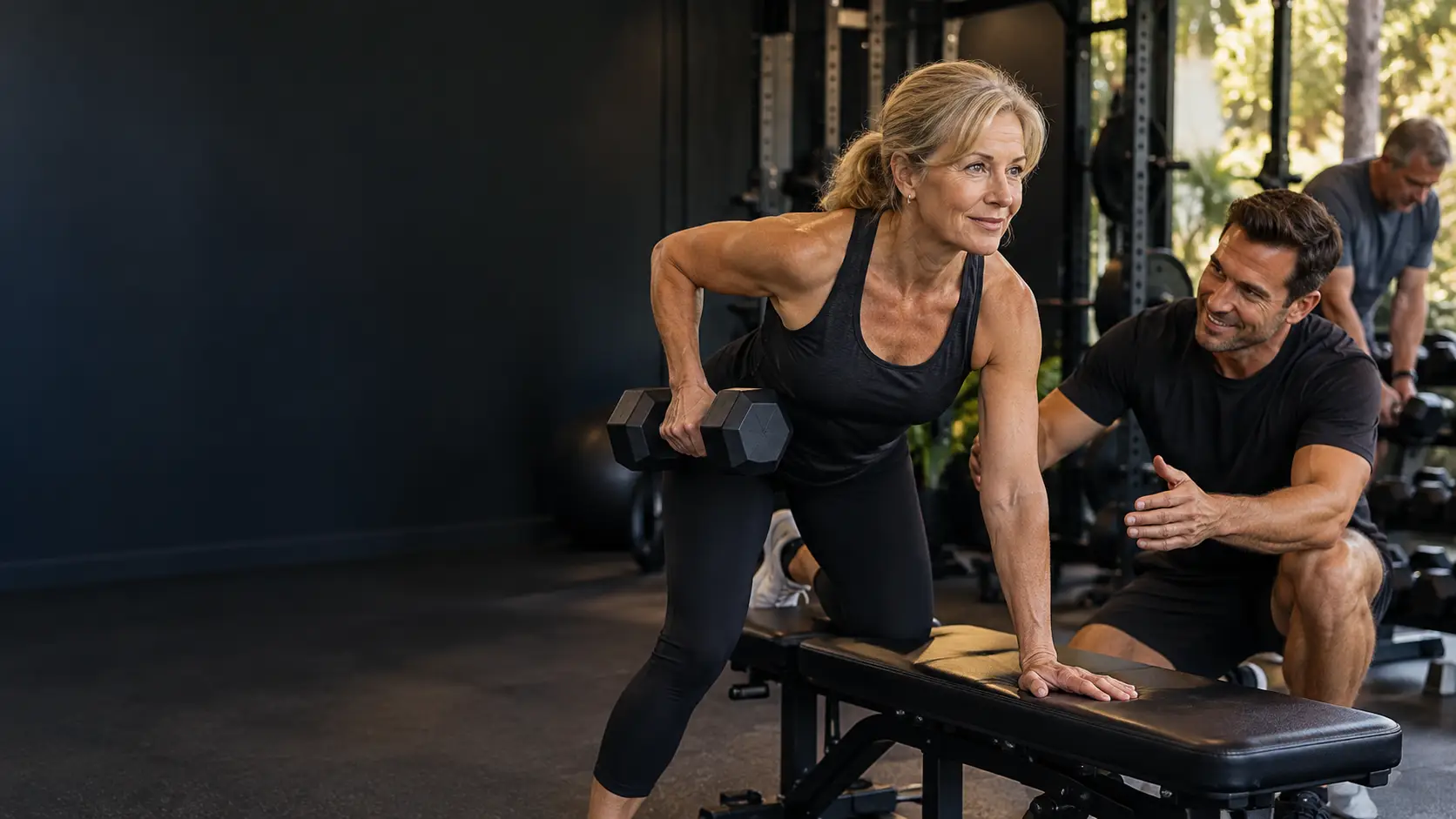
A good personal trainer should meet you at your current level.
If you haven’t exercised for several years, your training should look very different from someone who has been consistently training three or four times a week.
Your starting point isn’t important.
What matters is having a sensible plan that allows you to gradually become stronger and fitter.
What Happens When You Start Personal Training?
Your first few sessions shouldn’t be about seeing how exhausted a trainer can make you.
They should be about understanding you.
That includes things such as:
- Your current fitness level
- Previous exercise experience
- Injuries or physical limitations
- Your goals
- Your lifestyle
- Your available training time
- Your confidence with different exercises
From there, your training can be adjusted appropriately.
For someone new to strength training, this usually means learning the fundamental movements, gradually increasing resistance and becoming comfortable in the gym environment.
You don’t need complicated exercises.
You need the right exercises performed consistently.
What If I Haven’t Exercised for Years?
Then you’re exactly the type of person who can benefit from structured personal training.
Returning to exercise after a long break can be intimidating because you may remember what you used to be capable of.
The mistake is trying to immediately return to that level.
Instead, start conservatively.
You might begin with basic strength exercises, walking and manageable cardiovascular training.
Over the following weeks, your body begins adapting.
Exercises that initially felt difficult become easier. Your technique improves. Your strength increases. Your fitness improves.
Most importantly, training starts becoming part of your normal routine rather than something you constantly have to motivate yourself to do.
Is Personal Training Only for Young, Fit People?
Definitely not.
In fact, structured training can become increasingly important as we get older.
Maintaining muscle mass, strength, cardiovascular fitness, balance and mobility all become important parts of staying physically capable throughout life.
At Movement District, we work with adults across a wide range of ages, including people in their 40s, 50s, 60s and beyond.
Your training doesn’t need to look like what you see from fitness influencers on Instagram.
For many of our members, the goal is much more practical:
Get stronger. Move well. Improve fitness. Maintain a healthy body weight. And continue doing the things you enjoy outside the gym.
How Often Should a Beginner Do Personal Training?
For most beginners, two to three structured training sessions per week can be a very good starting point.
More isn’t automatically better.
Your body needs time to adapt and recover, particularly when you’re introducing strength training.
Consistency is far more important.
Two sessions every week for the next year will generally achieve far more than training five times a week for three weeks and then stopping.
You can also complement your gym sessions with simple activities such as walking.
A realistic week might include:
Monday: Strength training
Tuesday: Walk
Wednesday: Rest or light activity
Thursday: Strength training
Friday: Walk
Weekend: Something active you enjoy
It doesn’t need to be complicated.
Will Personal Training Help With Weight Loss?
It certainly can be part of a successful fat-loss plan.
However, it’s important to understand that fat loss isn’t simply about trying to burn as many calories as possible during a workout.
Nutrition plays a major role.
Strength training is particularly useful because it helps maintain and build muscle while you’re losing weight.
A good fat-loss strategy usually combines:
Strength training + regular movement + cardiovascular exercise + appropriate nutrition.
The goal shouldn’t simply be making the number on the scales smaller.
Ideally, you want to lose body fat while maintaining as much muscle and physical capability as possible.
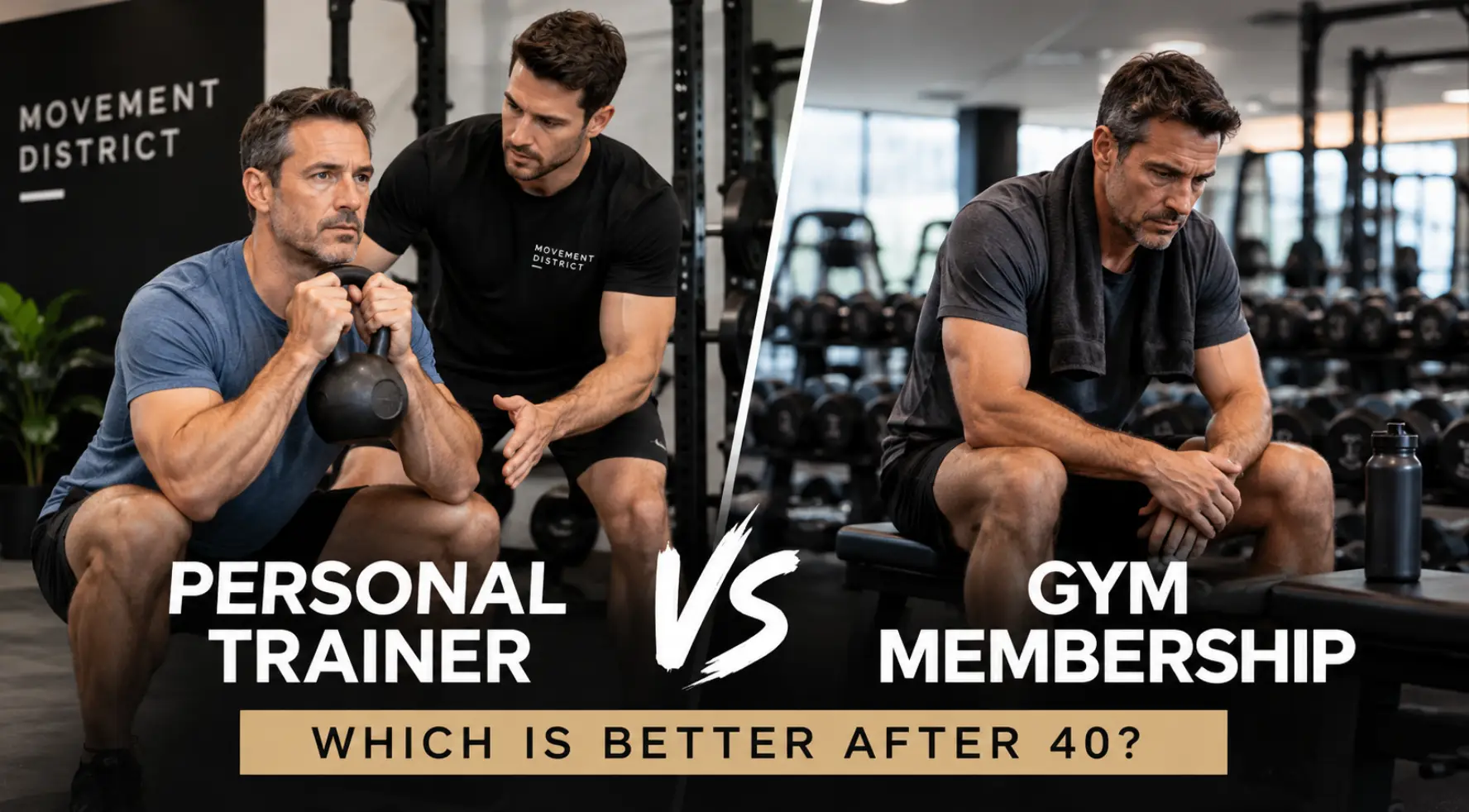
Personal Training vs Small Group Training
This is another common question.
Traditional one-on-one personal training gives you the trainer’s complete attention throughout your session.
Small group personal training allows several people to train at the same time while still following an individualised program.
At Movement District, our approach combines the benefits of coaching with the atmosphere of a small community gym.
You’re not simply joining a large fitness class where everyone performs exactly the same workout.
Training can be adjusted to your experience, goals and physical capabilities.
For many people, this creates a nice balance between individual coaching and having other people around you.
What If I Have an Injury?
Having an old injury doesn’t automatically mean you can’t exercise.
However, it’s important that your trainer understands your history before you begin.
Depending on the injury, exercises may need to be modified and your training progressed more gradually.
In some circumstances, it may also be appropriate to work alongside your physiotherapist or other healthcare professional.
The goal is not to ignore pain and push through everything.
The goal is to find ways to train safely and progressively.
What Should I Look for in a Personal Trainer?
Finding the right personal trainer isn’t just about finding someone who looks fit.
Look for someone who:
- Has appropriate qualifications
- Takes time to understand your goals
- Can adapt training to your ability
- Explains why you’re doing certain exercises
- Focuses on technique and progression
- Doesn’t make every workout unnecessarily difficult
- Creates a training plan you can realistically maintain
You should also feel comfortable asking questions.
Good coaching isn’t simply telling someone what exercise to perform next.
It’s helping them understand the process.
What Should I Bring to My First Personal Training Session?
You don’t need anything fancy.
Comfortable exercise clothes, suitable shoes and a water bottle are generally enough.
You also don’t need to know gym terminology or how every piece of equipment works.
That’s what coaching is for.
The most important thing you need to bring is a willingness to start.
How Long Before I Start Seeing Results?
This depends on your starting point, goals, training frequency, nutrition and lifestyle.
But one thing people often notice relatively quickly is that training starts feeling easier.
Movements become more familiar.
Weights that initially felt heavy become manageable.
Walking up stairs may feel easier.
You might notice better energy levels and greater confidence in the gym.
Physical changes generally take longer, which is why consistency matters.
Rather than asking:
“How much can I change in four weeks?”
A better question is:
“What could happen if I trained consistently for the next 6–12 months?”
That’s where significant changes can occur.
Starting Personal Training in Edgecliff
If you live or work around Edgecliff, Double Bay, Darling Point, Rushcutters Bay, Paddington or Sydney’s Eastern Suburbs, having a gym that’s convenient makes consistency much easier.
Movement District is a small personal training and coaching studio located in Edgecliff, Sydney.
We specialise in helping everyday people become stronger, fitter and more confident with exercise — including people who haven’t trained for years.
Our approach isn’t about smashing you in every workout.
It’s about finding an appropriate starting point and gradually progressing from there.
Start With Movement District’s 28-Day Introduction
If you’ve been thinking about starting personal training but aren’t sure whether you’re ready, you don’t need to wait until you’re fitter.
Start where you are now.
Our 28-Day Introduction at Movement District Edgecliff gives you the opportunity to experience our coaching, learn how we train and begin building a consistent exercise routine.
Whether your goal is to lose body fat, build strength, improve your fitness or simply feel healthier and more capable, we’ll help you establish a realistic starting point.
Looking for a personal trainer in Edgecliff? Get in touch with Movement District and find out more about our 28-Day Introduction.
Frequently Asked Questions About Starting Personal Training
Do I need to be fit before getting a personal trainer?
No. A personal trainer should adjust your training to your current fitness and experience level. You don’t need to get fit before you start.
How many times per week should a beginner train?
For many beginners, two to three structured sessions per week is a practical starting point. The right frequency depends on your goals, experience and recovery.
Am I too old to start personal training?
There is no requirement to be young or already fit to start exercising. Training should simply be appropriate for your current health, capabilities and experience.
Can a personal trainer help me lose weight?
Personal training can form part of a fat-loss program by helping you improve strength, fitness and activity levels. Nutrition and overall calorie intake also play an important role in losing body fat.
What if I’ve never been to a gym before?
That’s completely fine. A good coach should teach you how to perform exercises, use equipment and gradually build your confidence.
Where is Movement District located?
Movement District is located in Edgecliff in Sydney’s Eastern Suburbs and works with clients from Edgecliff and surrounding areas including Double Bay, Darling Point, Rushcutters Bay and Paddington.